Road Runner Sports - GREAT DEALS!

11% Off RRS Gear Plus Free Shipping_468x60
Showing posts with label nutrition. Show all posts

Thursday, April 19, 2012

The Heat of the Boston Marathon 2012

For more, go to http://www.applecrumbles.com/2012/04/17/boston-2012-the-hot-one/

The night before my key race of the year, this is the notice arriving on my cell:

Advisory From Boston Marathon MEDICAL DIRECTORS to Entrants in the 2012 Boston Marathon
Sunday, April 15, 2012 as of 4:30 p.m.
The weather situation continues to be a significant concern for Boston Marathoners. We have determined that the race will occur in a "red zone" which is considered an increased risk but acceptable for high-level elite runners. However, it is not considered safe for unfit and novice runners.
We strongly recommend that unless you have met qualifying times for this race that you accept the deferment option from the B.A.A.
Anyone who has not run a qualifying time should also very strongly consider the deferment option.  
Again, if you have any medical problems or if you under-trained, then please do not run this marathon. 
Those who are running the race should run much slower, adding several minutes to your per mile pace. 
Also important, please be sure to complete the emergency medical contact information on the reverse side of your bib. 
Remember, unless you are acclimated to the weather conditions forecast for Monday, you should not run. 
For those very fit athletes who decide to run, you should take significant precautions:
  • Run at a slower pace and maintain hydration.
  • You should frequently take breaks by walking instead of running.
  • Heat stroke is a serious issue and is related to intensity of running as well as the heat and humidity.
  • Good hydration is important but over hydration is also dangerous.
  • Thirst is an indication that you are under-hydrated. You should maintain hydration levels slightly greater than your hydration program in your training, but not excessively so. Over-hydration can cause severely low sodium, known as hyponatremia.
    Even the fittest athletes that take precautions can still suffer serious heat illness. Recognizing symptoms of heat illness in yourself and others is critical. This may include headaches, dizziness, confusion, fatigue, nausea and vomiting. If you experience any of these, stop running immediately and if symptoms persist seek medical attention.
After training through a mild winter and feeling as if a PR was mine to be had, there was nothing stopping me from going the 26.2 miles.  It didn't matter if I had to go slow, I would make it to the finish line. 

Nutritional needs for a hot race.
  • Hydrate the day before and drink 20 oz of water before bed, the night before the race.
  • Consume potassium rich foods the day before and morning of the race. 
  • Keep core body points cool before you over heat:  The back of the neck, the wrists. 
  • Dump water over your head, on your wrists, hands (they will swell), and neck.
  • Use ice to cool you down if available.
  • Drink an electrolyte drink such as Gaterade instead of just water. Too much water can cause hyponatremia, just as fatal as heat stroke.
  • Slow your pace. It's not a day for a PR.
My experience in Boston on April 16, 2012.

1 – 5 miles: Although the course drops sharply, it didn’t feel so easy this year. The crowds were in full force and the fiddler players were out as were the bikers at TJ’s Lounge. This was suppose to be where everyone had so much energy and felt great. On this day, I was looking at the Dunkin’ Donuts thinking of jumping out of the race and calling Ted for a pick up, thinking I never should have crossed that starting line. This was a bad idea!

6 – 11 miles: A tough part of the course as it levels out. There was very little shade but the crowd was handing out more ice and it was getting a little easier to make it mile by mile. I was cooling myself down with ice and water, I was taking in a lot of Gaterade and water but keeping a good balance. I was on schedule with my fueling, gels, Endurolyte tabs, and I was moving forward, slow but steady. I made a quick porto-potty stop then took off running.

*By the way, good time to check your fueling based on making a pee stop. If your clear as water, DANGER zone. You’re getting too much water and need to worry about hypernatremia. If you’re urine is very dark, you need to drink more because you’re dehydrated.

12 – 16 miles: Wellesley wasn’t quite a scream tunnel on this day. The small med tent was already filled. I was still contemplating dropping out at the half. When crossing the 13.1 mat, saw my time at 2:04 and thought “My longest half marathon ever.” Discouraging but based on seeing the suffering other runners were going through and the way I felt, there was nothing to be done. I also knew if I made it to mile 16, I could make it all the way and forged ahead.

17 – 21 miles: The Newton Hills. By this time I was ready to walk the length of every hill. I had been jogging up most of the hills, at least part way and running the flats and declines. The sharp right turn onto Commonwealth by the big red brick building was relief to my eyes. I was ready for the hills, not to run but just to get over them and get the hardest part of the course out of the way. I did jog some of the first hills but walked all of Heartbreak.

*So sad to walk Heartbreak. That’s the hill you are determined to conquer in your training for Boston. Monday, April 16th, that hill conquered many of us. There is a big display that shows the runners as you all proceed up the hill. As I looked at it, and then looked around me, there were more walkers than runners. This was Boston, we should be running but we couldn’t. The heat had tapped all the energy from our bodies and so we walked.

22- 26.2 miles: Those last miles were hot and even more challenging than the hills. The crowd support was once again amazing as they tended to fallen runners and urged us on to finish this thing. There was one situation that engraved itself in my mind: An older athlete was being dragged to the side, out of the way from on coming runners. He was completely out of it and his color was grey. I was so afraid for him.

As for me, my body felt good. My hands were still very swollen, my Garmin felt tight, but I was doing a great job at cooling myself and not exerting myself. I thought I could make an effort and run a bit harder but instead continued to run- walk since that last stretch to the finish on Boylston Street was a RUNNING must! I walked up Hereford and turned onto Boylston at a run. I could see the finish getting closer, it was going to happen.It was a challenge and this body did it!

Wednesday, August 24, 2011

Had a Bad Race?

When you have a bad race, take a good look at the past week leading up to that race.  Did you taper? Were you good to your body? Did you make sure to eat healthy and in ways that would optimize your energy levels?

I had a bad race.  It was a half marathon.  It was only my bad race because the event itself was excellent. The Turning Stone Half Marathon was the first year running. Organizers catered to the runner in ways that were over and above the call of duty.  The course was rolling but not in a way that didn't allow the runner to get a good rhythm going over the course of 13.1 miles.  Although the roads were not blocked off, the traffic was light and the roads very well marked for a race in progress.  Timing indicators were located at miles 1, 3, 6, and 10.  Water stops were well dispersed along the course and a porto-potty was set up around mile 11.

This was my week in exercise.  Can you tell what I did wrong?
  • Monday:  cycled 34 minutes. ran 4 1/2 miles and worked with weights on legs and abs.
  • Tuesday: ran 8.35 miles. Worked with weights for chest and arms
  • Wednesday:  ran 6.14 miles.
  • Thursday:  worked with weights for shoulders and back and walked the dog 3 1/2 miles.
  • Friday:  Cycled 16 miles to the Turning Stone for package pickup. Spent 2 1/2 hours walking around waiting for the 5K run at 6 pm.  Ran the 5K at a slow, easy pace (27 minutes).  Cycled home, another 16 miles.
  • Saturday:  Rest day, although I walked the dog 5 miles at a healthy pace. The rest of the day was spent on my feet baking. 
  • Sunday: The Half Marathon

In review, I did not set my self up for a good race on Sunday. Cycling 32 miles, when my longest ride all summer had been 17 miles, was unwise.  The 5K to follow the cycling, no matter how easy, was also not a smart idea.  Being on my feet all day Saturday when I should have rested my legs was the ultimate in securing a bad race.

Race Day:
I did feel good but was not in the mood to push myself.  I decided not to look at the Garmin and to let my body dicatate the pace.  It did. My body dictated a recovery pace which equated to my slowest race pace in a very long time.  1 hour 50 minutes and 47 seconds.  That was 7 minutes off of goal time.

How to set yourself up for a good race:
If you want to have a good race and possibly set a personal record on that day, you must pay attention to all variables at least 5 days prior to the race. Don't ever under estimate a race.  Don't ever take a race course for granted.  Approach the race and the course as if it could be the toughest challenge of your running career.  You will want all the energy you can find to push yourself over the finish line as fast as possible.
1.  Establish your eating plan the week prior to the race. Don't under eat but don't stuff yourself.  Eat protein rich food the first few days of the week with a lot of fiber  and moderate carbohydrates.  Three days prior to the race, increase your carbohydrates with a balance of lean protein and quality fiber. The day before the race, increase the carbohydrates, decrease the protein to about 15- 20 grams per meal (x 3), limit fat intake and moderate fiber.  Remember: Carbohydrates can cause constipation so you do have to eat fiber and drink a lot of water. No alcohol.
2.  Taper your workout.  If you are currently running 40 to 50 miles per week, decrease your miles to half that distance or less. It depends on the person.  If you feel the need to get a long run in before your race, do it five days prior to the race.  Give yourself a day off before the race and make sure to limit the time on your feet. Try to read a good book, watch a favorite movie. 
3.  Decide if you are going to run a race where you will exert yourself or if you are going to sit back and enjoy the experience.  Stick to your plan and be happy with your decision.

Be prepared to live with your decision.  If you don't run all out, if you take it easy, don't beat yourself up after the race for not trying harder.  There will be more races.

For more, go to www.applecrumbles.com

Tuesday, July 12, 2011

Utica Boilermaker 15K Road Race 2011

The Utica Boilermaker 15K Road Race is a fun, longer distance run with so much crowd support, you lose yourself in the excitement.
Whether a spectator, a runner, or a race worker, you will have a great time in this annual weekend long event.
Beginning on the Friday with the Fitness Expo


Kid's races, distance walks, and other events on Saturday, finally culminating in the Boilermaker 9.3 mile road race on Sunday.  A terrific afer party with Beer, Food, and over 30,000 people.  Fun, fun, fun!

A Personal Experience in Running the 2011 Boilermaker:

As usual in a race, three finish time goals were set in my mind:
1:10 = Highly unlikely but it might be worth the effort if "all stars align"
1:12 = Aggressive, but do-able.
1:14  = Last years time.  Nothing to get upset about but would like to see progress.

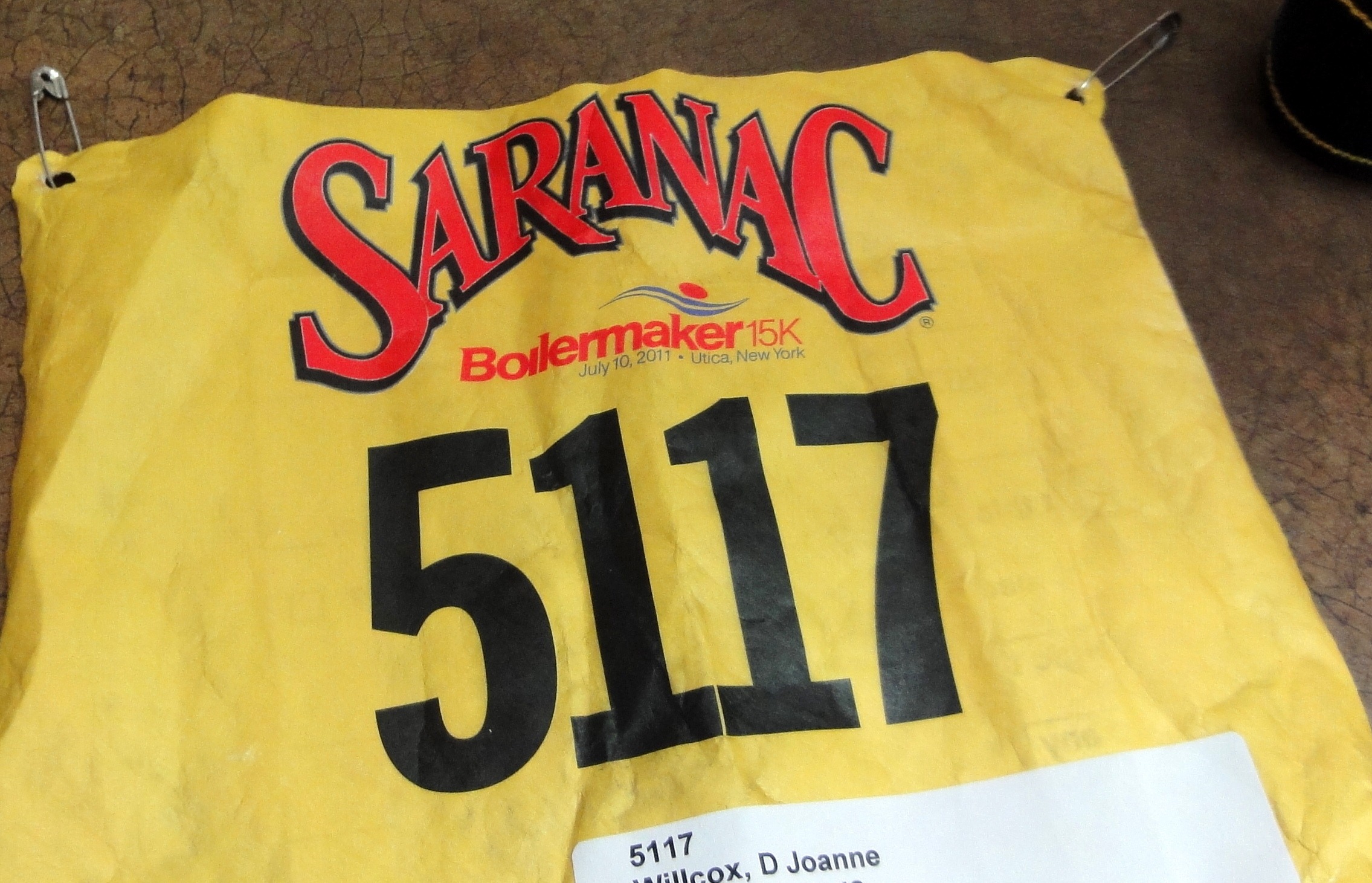
After picking up the race packet from the Expo on Friday, my bib color was yellow.  This meant I was in a corral one behind the assignment from last year.  I let this bother me.  In reality, it didn't make a difference and it should never have upset me in the first place.  After all, running is for fun and fitness. The 9.3 miles was going to be run at my best whether I was behind 100 or 10000 people. 
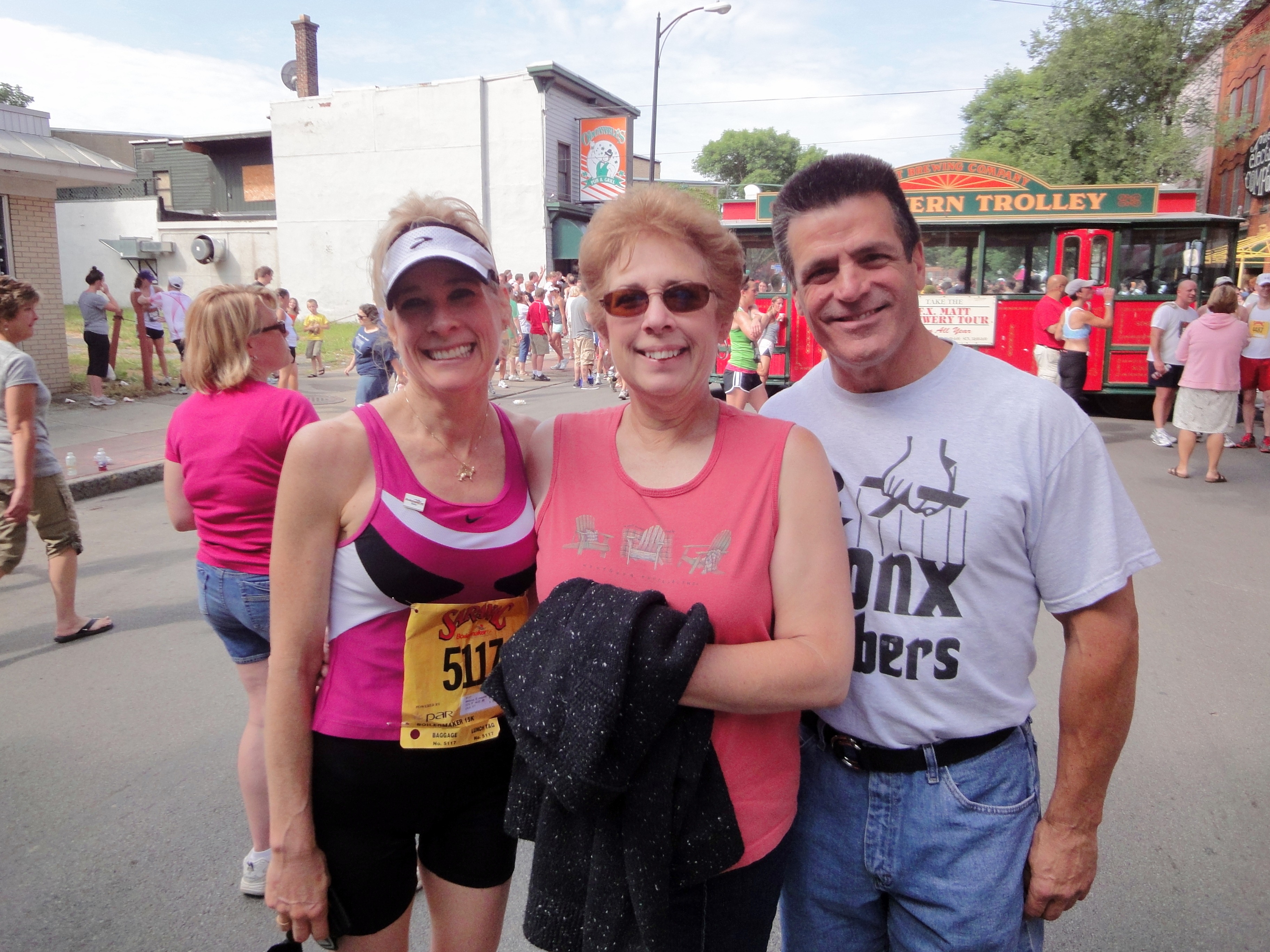
DSC00444
It’s how you run after you cross the starting line.

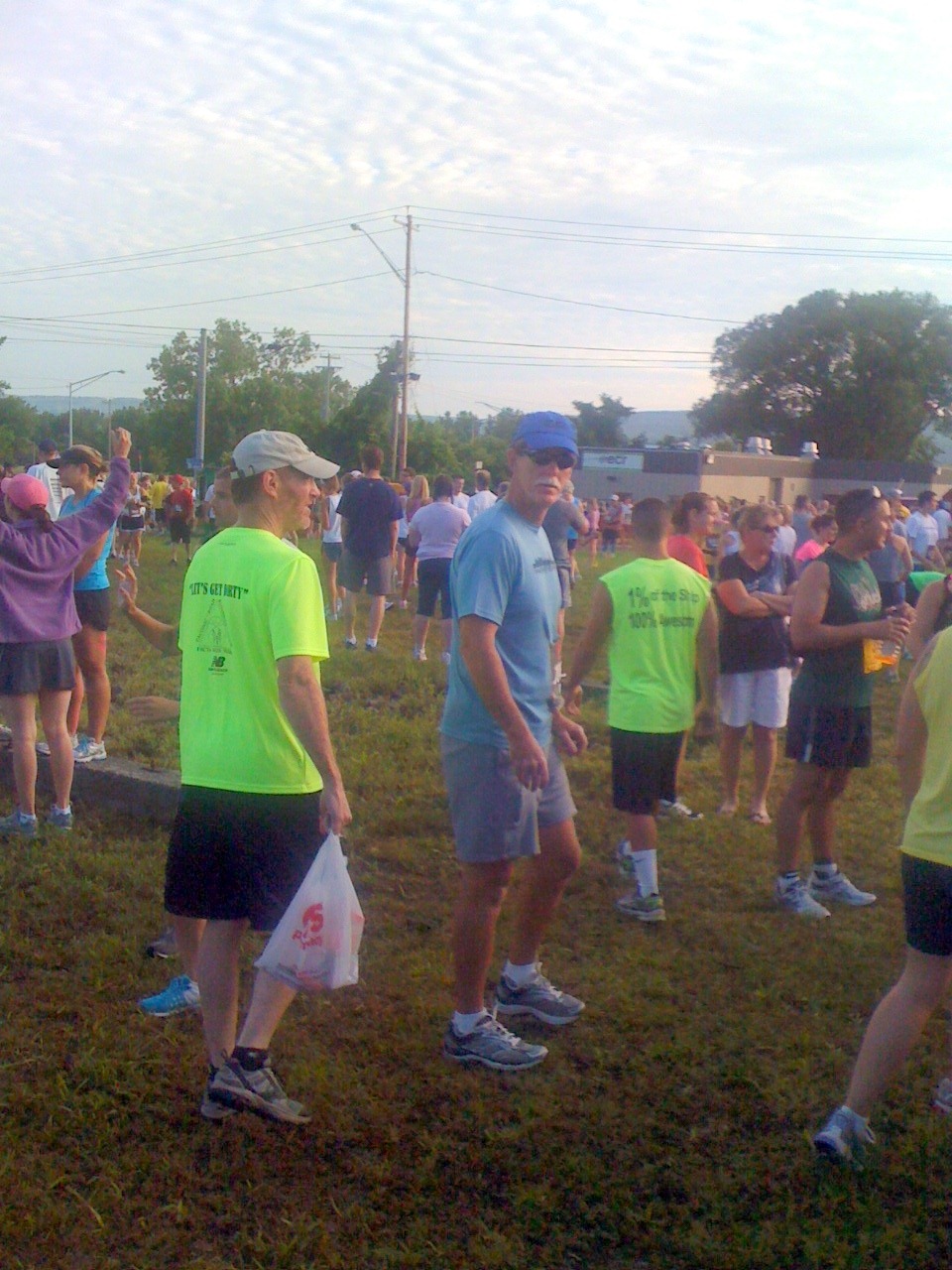
The starting line:   A mass of people.  For first timers in a large race, the sea of people might be overwhelming, causing nerves to get out of hand.  Relax.  All those people are out there to do the same thing you're going to do:  run a fun race the best they can.
boilermaker start
The start is well organized with officials being very strict regarding bib color and corral placement.  Don't try to sneak up in rank, it won't happen.  You can however, move behind to run with friends or family.

Speak to other runners and relax, take your mind off the job at hand until it's time to go.

The wheel chair gun goes off at 7:45 am.  The rest of the course begin at 8 AM and it's usually a few minutes until average runners cross the starting line.  Be patient.  Walk.  Don't try to start running with a wall of people in front of you. 

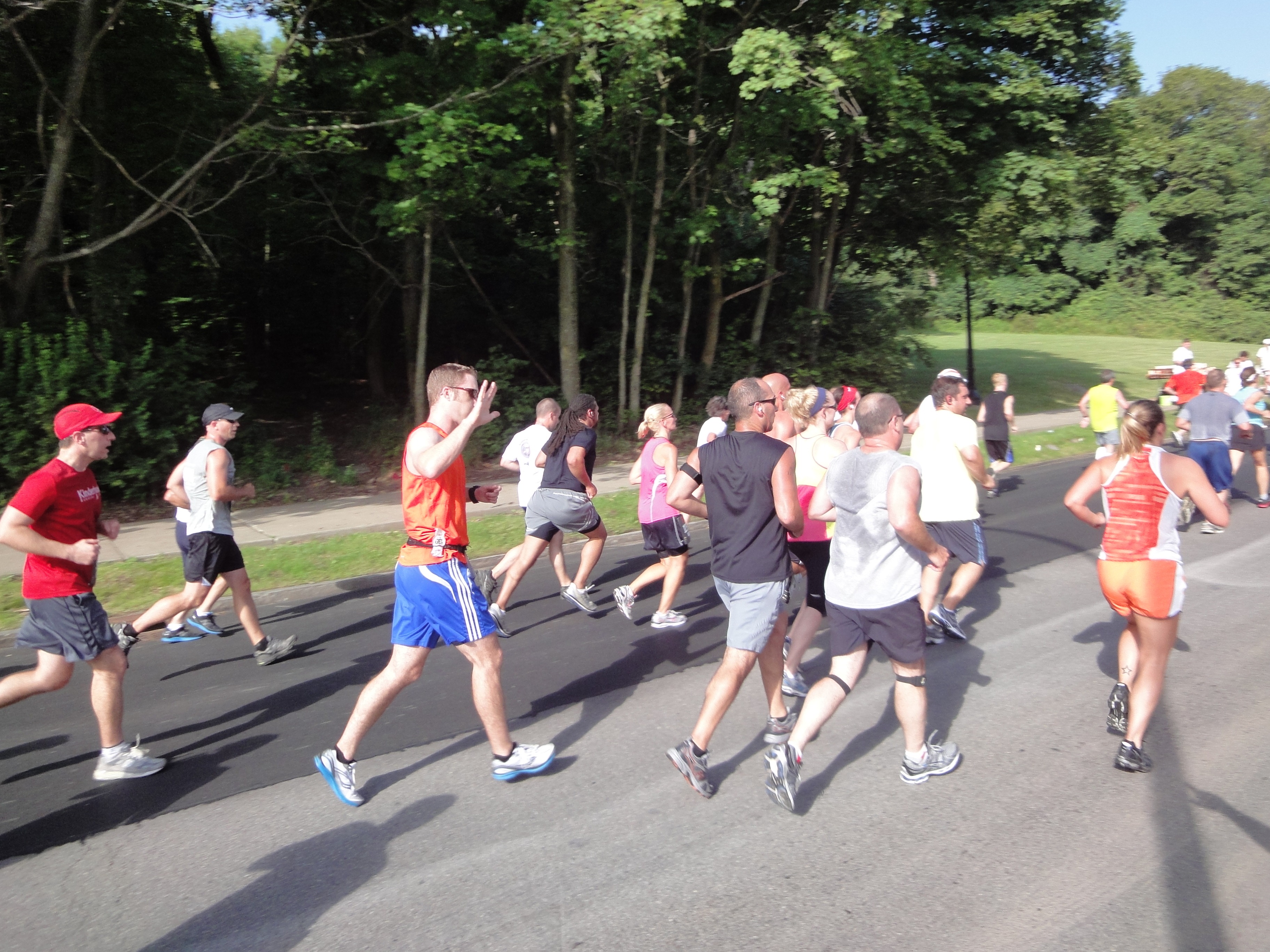
The pack won't loosen up for a couple of miles so the best bet is to run within the crowd as opposed to trying to skip to the grass and around.  You'll end up running more than a 15K.  Allow the crowd to control your initial warm up pace.  Take the first 5K (3.1 miles) slow, as a warm up.  Turn it on when you escape the masses.
DSC00441

Immediately, the crowd is on your side. They cheer for you beginning at the .1 mile mark. That's .1 not 1!  AND.. they will be with you all the way, the rest of the 9.2 miles.  Enjoy it.  Let the crowd fuel your run.

Because the Boilermaker begins with a slight incline, it may be a hard start.  Don't stress. Your legs will warm up and you will find a rhythm.  Take in the bands, the music, the dancers.  Run for fun.

Running Fuel:  Three to four hours before race start:   I had half an Ezekiel bagel with half a banana.  A bowl of oatmeal with a small piece of fruit works for a lot of people.  I don't recommend cereal with milk because dairy products (milk) can cause stomach upset. 
Before the gun,  an energy drink or gel is a good choice.
Between miles 3 to 5 and when a water stop is available, take another gel. Gels must be washed down with water or Gaterade.

Because the Boilermaker is run in July and typically warmer weather, it's important to take water or ice at each of the stations.  I hit all but 3.  It seemed like water was available every mile.

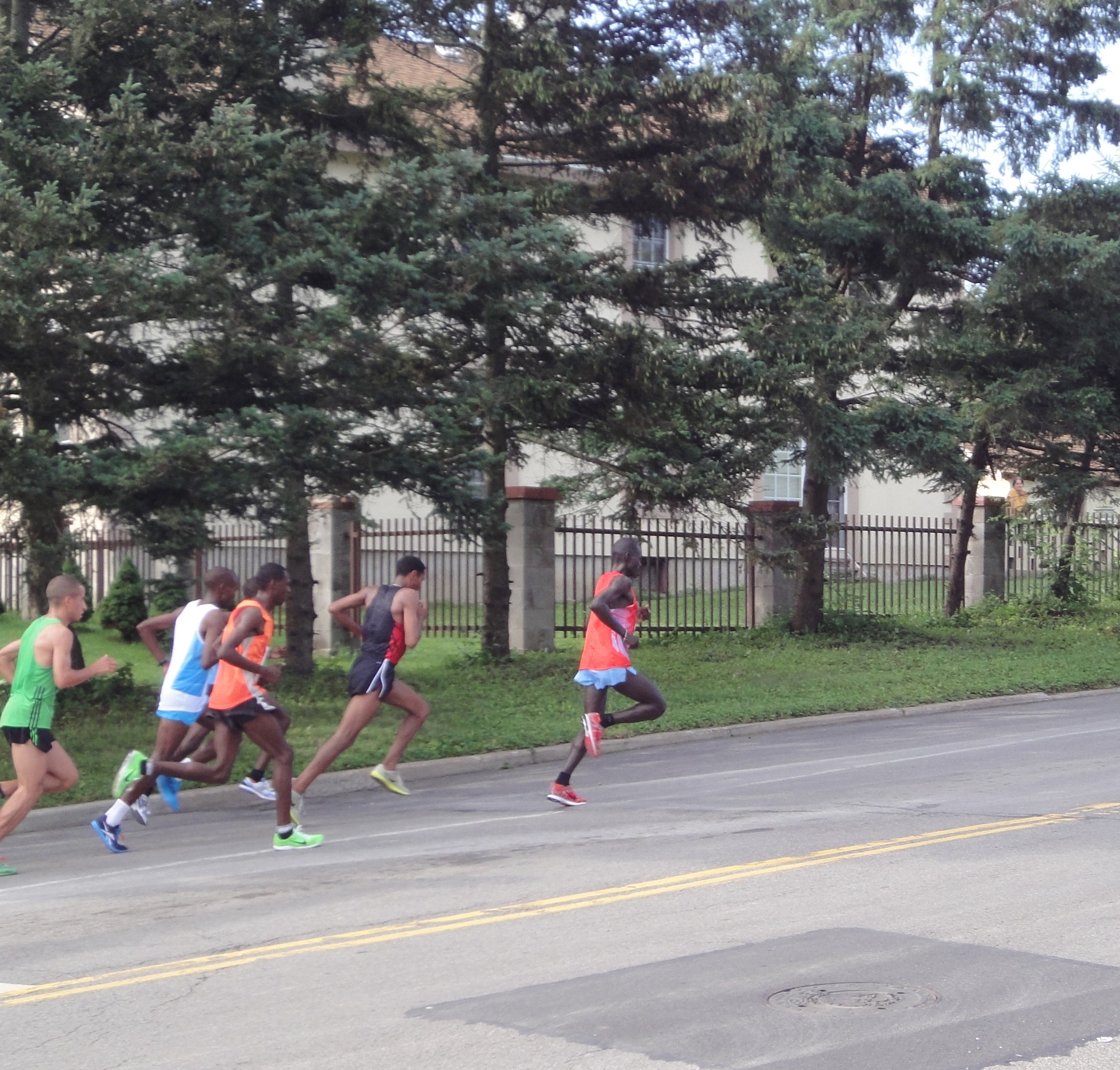
There are a few inclines.  Take them slow and enjoy the desents.  Don't push hard on the down hills. Allow gravity to take you.  You will only gain about 5% on the down hill and you'll lose 10% on the up hills. It's best to train for up hill running so you can take those hills strong.

DSC00442
The flats allow a runner to get in rhythm.  Set a pace.  Focus on the run.  It's during those "focus" times when I'm pushing hard that I begin to remember my pace goal.  I promise myself if I achieve it, I'll never run again.  But we all know that will never happen.  If I get my goal pace, I'll run harder the next time.  Set my goals even higher.

Turning up towards Utica College, at about the 6 to 7 mile point, is the third challenging incline.  It's gradual but it's long.  Dive into the sprinklers when they are offered.  Take water, focus on pace but run strong. 
So Close!

Some say the last 1 1/2 mile to 2 miles seems the longest.  That's most likely because of the heat, because you've been working hard.  The finish line is within reach.  Go for it!

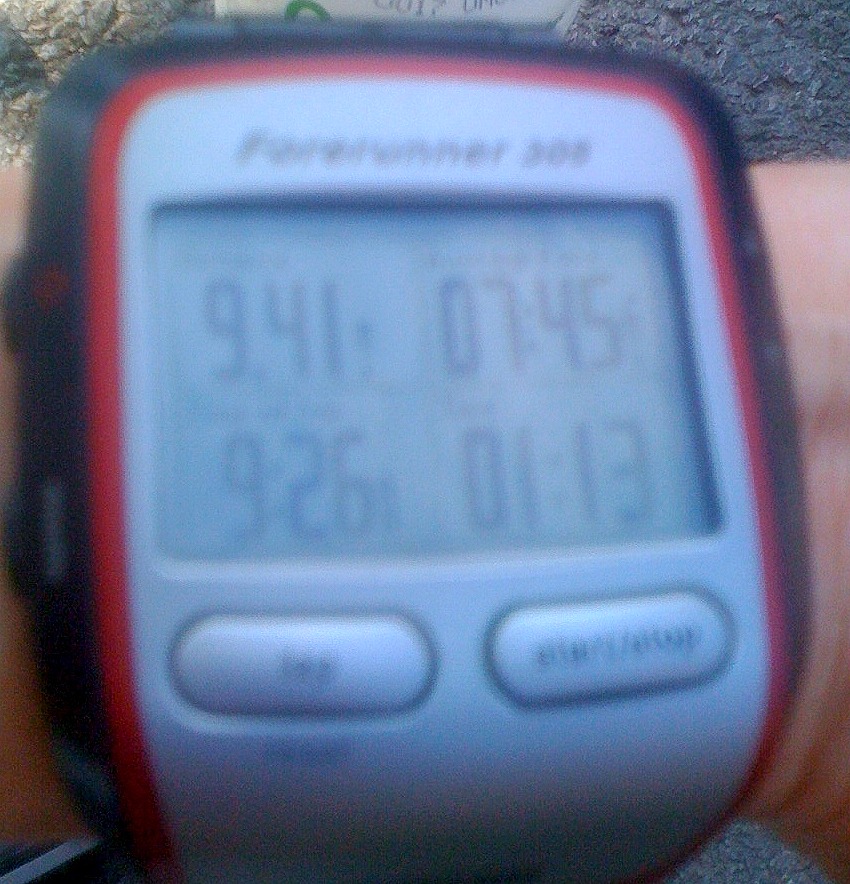
My official NET time:  1:13:01.  This was my 2nd Boilermaker and it was a Personal Best. 
Splits – per Garmin:
1.  8:01 – Jell-O legs
2.  7:40 – Saw my parents.  WAVE! *The first time my parents have seen me run a race.
3.  7:50 – on towards Valley View.  I can’t tell you how many times I’ve run this road.
4.  8:03 – Into the golf course and up the hill.
5. 7:02  *Whoo- Whoo! (it was a down hill…I must confess)
6. 7:33 – Genesee Street and Sunset Ave.
7.  8:20 – To Utica College…chug, chug, chug
8. 7:33 – Doooowwwwnnnn, we go again.
9. 8:05 –That last mile. Just….Keep…Going.  Don’t stop for anything.
.3.  7:10 – The finish line is within reach.

Finished 1723 out of 11043(from the Utica OD). 31 out of 474 in my age group (from the Boilermaker site), 292 female.

DSC00443

time
If you ran, hope you had a GREAT race. See you next year!